

/ 2026-01-19 19:13 / Expert Talks on the Hainan FTP
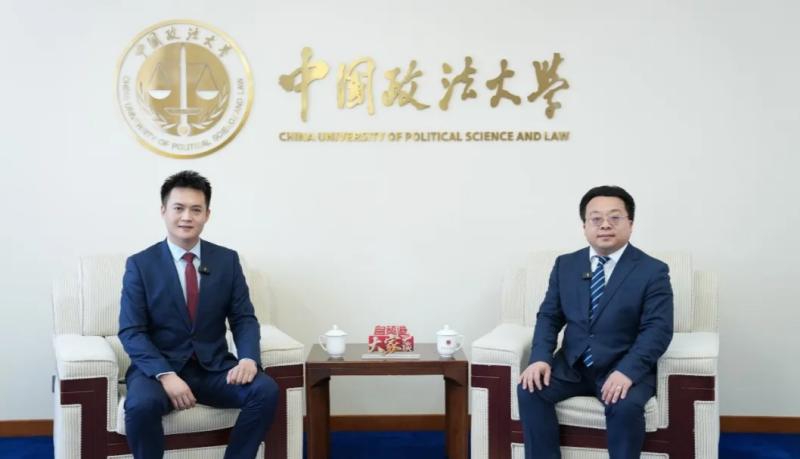
The launch of island-wide special customs operations marks a new starting point and a new stage in the reform and opening-up of the Hainan Free Trade Port (FTP). In Episode 15 of FTP Expert Talks, we sit down with Yu Fei, Vice President of China University of Political Science and Law.
Profile
Yu Fei, China University of Political Science and Law Vice President
A Solid First Step for the Hainan FTP
Reporter: The Master Plan for the Construction of the Hainan Free Trade Port sets out a "three-step" roadmap for the FTP's development. On December 18, 2025, the Hainan FTP officially launched island-wide special customs operations. In other words, it has completed the "first step" of the "three-step" roadmap. In your view, how well has Hainan taken this "first step"?
Yu Fei (Yu): I'd say that the Hainan FTP has taken the first step solidly and stridently with remarkable results. First, it achieved special customs operations on schedule. The policy of "freer access at the 'first line', regulated access at the 'second line', and free flow within the island" has begun to take effect. Hainan's practice, I would say, has set an example for China's high-level opening-up. And the key to making this possible lies in striking the right balance between opening up and security, and building a law-based foundation with the Hainan FTP Law at its core. The Master Plan has also laid the groundwork for aligning with high-standard international economic and trade rules. In short, Hainan's practice has not only marked a milestone for its own development, but has also provided a replicable experience and a model for China's broader institutional opening-up.
Reporter: With the launch of Hainan FTP's island-wide special customs operations, and as opening up continues to deepen, building a stable, transparent, and predictable law-based environment is essential to boosting long-term confidence among both domestic and international investors. In your view, how can the Hainan FTP Law serve as a "ballast stone" for this stability?
Yu: The Hainan FTP Law is extremely important, absolutely central. For investors, it's a reassuring guarantee, and for the sustainable development of the Hainan FTP as a whole, it is a "ballast stone."
First, as national legislation, it enshrines the core institutional framework for FTP development, and clarifies the basic logic of "freer access at the 'first line', regulated access at the 'second line', and free flow within the island," providing investors with a long-term, stable institutional environment. Second, it establishes an implementation mechanism featuring "central coordination with local implementation." This ensures that opening-up policies advance in an orderly way under the rule of law. At the same time, it regulates administrative power and improves coordination between administrative enforcement and the judiciary, thereby reducing arbitrariness in enforcement, and giving market entities a clear understanding of compliance boundaries and the adequate protection of their rights and interests. Third, it focuses on issues of most significant concern to investors, such as fair competition, intellectual property protection, and dispute resolution. It sets a system-oriented direction aligned with high-standard international economic and trade rules, so that investors have clear legal guidance and reliable avenues for relief in cross-border transactions and rights protection.
Overall, the core value of the Hainan FTP Law lies in using the certainty of the rule of law to respond to the complexity of an open environment. It safeguards the nation's fundamental security, while providing solid protection for unleashing market vitality, giving both domestic and international investors the confidence to plan for the long term in Hainan and invest with peace of mind.
Building a High-Standard Legal Services Zone to Strengthen Investor Confidence
Reporter: A world-class business environment typically aligns with high-standard international rules. As Hainan's aligns with international economic and trade rules such as RCEP, CPTPP, and DEPA, how should the Hainan FTP strengthen law-based development to build a world-class business environment that is market-oriented, law-based, and internationalized?
Yu: The core will be translating what is common across international rules into localized law-based institutions and policy supply and building a law-based ecosystem that is aligned with international standards and trusted by the market.
First, on legislation, Hainan needs to adapt a targeted, precise legislative approach to align with high-standard international rules. For instance, in digital trade, Hainan can draw on DEPA, including regulations on cross-border data flows and algorithm governance, to improve systems such as data tiering/classification and outbound data security assessments.
Second, on the judiciary and law enforcement, we need to optimize jurisdiction and trial mechanisms for foreign-related civil and commercial cases to enhance the international recognition and credibility of judgments and arbitration. We should promote smart regulation, and integrate it with credit-based regulation. We should treat all types of market entities equally and fairly.
Finally, it comes down to strengthening coordination. On the one hand, strengthening legislative coordination between the central authorities and Hainan, and on the other, strengthening coordination among enforcement, adjudicatory, and regulatory agencies to address fragmentation in cross-border regulation. Universities and research institutes should also build rules interpretation and training platforms to boost the efficacy of international rules implementation at the government and enterprise levels and truly transform high-standard law-based systems into real business environment benefits.
Reporter: On December 30, 2025, the CPC Hainan Provincial Committee met to discuss advancing law-based governance. It proposed expanding opening-up in the legal services sector, and making overall plans to build a Hainan Free Trade Port Legal Services Zone. What is your view on this?
Yu: Building a Legal Services Zone is a crucial step toward establishing a world-class business environment. We want investors to come. We want technology and high-end services to come. But why would they come? And why would they even dare to come? First and foremost, they must believe that once they arrive, their property rights will be protected. When they sign a contract, the other party is obligated to honor it, and their rights will not be infringed. And if they are infringed upon, or if the other party breaches a contract, they can seek legal remedies and be treated fairly and reasonably. And those remedies must be timely. All of this requires a law-based foundation that enables investors to feel secure and confident and to plan for the long term. That's the foundation. We require a concentration of legal resources that offer high-quality services in one place. That place is the Legal Services Zone. Building a high-caliber Legal Services Zone in Hainan is a crucial move. It will create a shining legal calling card for the FTP, one that only becomes brighter with time.
Creating a Future City for Professional Fulfillment and Talent Development
Reporter: As a leading law and political science university, China University of Political Science and Law has established the Hainan Free Trade Port Legal Research Institute and the Hainan International College in Hainan. In the future, how will CUPL support the Hainan FTP in training foreign-related legal professionals, providing legal think-tank services, and promoting international exchanges and cooperation?
Yu: First, we will use innovative training for foreign-related legal professionals and build a dedicated talent pool. Through the Hainan International College, we will offer full-spectrum degree programs at the undergraduate, master's, and doctoral levels. We will bring in well-known legal practitioners from China and abroad, and connect with key FTP industrial parks and arbitration institutions, bridging domestic and international perspectives, and connecting theory with practice to cultivate for the Hainan FTP dedicated, interdisciplinary, high-level talent.
Second, we will focus on major strategic and practical issues, leveraging CUPL's research strengths to serve as a high-end think tank for Hainan's long-term, sustainable development. Through the Hainan FTP Legal Research Institute, we will focus on key issues following special customs operations, including legal alignment, secure cross-border data flows, the legal framework for offshore finance, consumer rights protection in duty-free shopping, as well as international dispute resolution. We will refine and advance these key topics, organize high-level interdisciplinary teams to tackle research challenges, and deliver high-quality legislative proposals, risk assessment reports, and draft rule-design plans.
Third, we will build bridges for discussions on rules design and institutional connectivity. We will work to promote comparative research and mutual recognition with Belt and Road partners and RCEP member regions in commercial law, arbitration, and mediation. This will help Hainan become an "uplink" for international commercial rules and a preferred destination for dispute resolution, enhancing its visibility and influence within the global governance system and the global discourse on the rule of law.
Reporter: A world-class, rule-of-law-based business environment requires top-tier legal talent and professional services. How can the Hainan FTP attract and retain top global talent in law, arbitration, and financial regulation?
Yu: We need to think beyond the habitual reliance on policy incentives alone and build a systematic talent ecosystem. First, we must create high-end platforms that give talent a place to excel. Second, we must promote deeper opening-up and alignment of professional practice rules and remove barriers to cross-border practice and achieve institutional connectivity in professional conduct. Third, we should create a stable, transparent, and predictable law-based business environment. Finally, we should provide international living services that support both living and working, as well as an open and innovative community culture, so that people can thrive professionally while also building a fulfilling life. Ultimately, we want Hainan to become more forward-thinking; a place where professional value can be fully realized, and where individuals and families can develop in all dimensions.

Office of the Hainan Free Trade PortWorking CommitteeNo. 69 Guoxing Avenue, MeilanDistrict, Haikou City, Hainan Province.570203, China

hnshgb xchch@sina.com





Copyright © 2020 Hainan Free Trade Port
Qiong ICP 19005356
All Rights Reserved

Office of the Hainan Free Trade PortWorking Committee
No. 69 Guoxing Avenue, MeilanDistrict, Haikou City
Hainan Province.570203, China
hnshgb xchch@sina.com
Copyright © 2020 Hainan Free Trade Port
Qiong ICP 19005356
All Rights Reserved


